
What is the WAV
Production Operating System?
The WAV Production Operating System is a white-label production infrastructure that takes a brief from intake to consumer delivery through a structured sequence of human and agent-driven stages — removing unpredictability from creative production without removing the humans who do the work.
This is the story of a single brief — from the moment it arrives to the moment a consumer sees it.
Every stage, every agent, every decision that shaped it along the way.
This is how we work.
Most production fails not because of talent, but because of structure.
TL;DR, We Are Volume is a white-label production partner that operates as an invisible layer between agencies and the work — absorbing demand, absorbing complexity, and returning clean, on-spec delivery without adding friction to the relationships that matter.
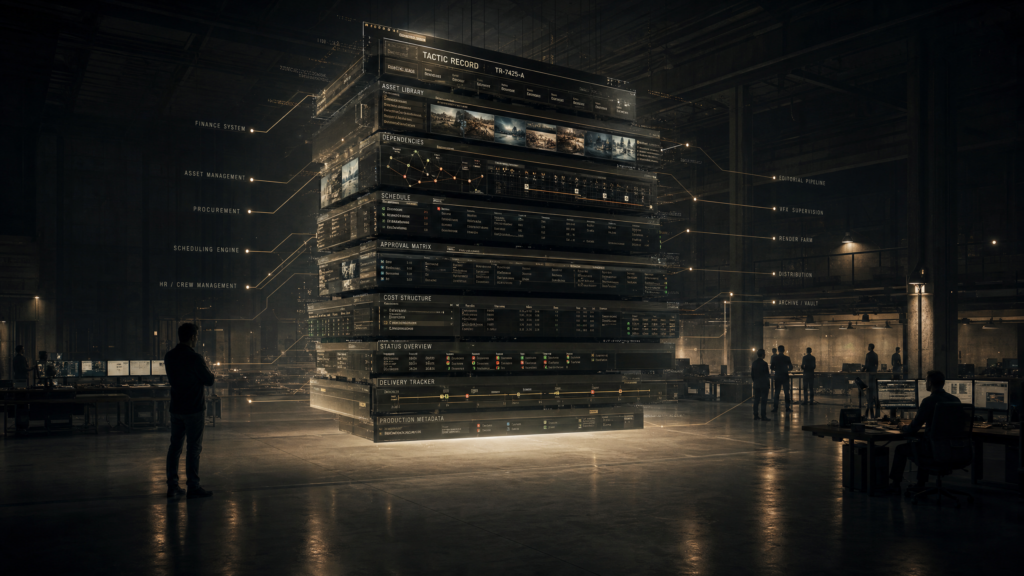
The WAV Production Operating System is how that works in practice. Every tactic that enters the system is captured in a single governed record — scope, schedule, budget, roadmap, decisions, risks — so there is always one source of truth, regardless of where in the lifecycle the work sits.
Every project makes the next one more accurate. Every intake refines the estimate. Every delivery tightens the model. The system gets more efficient the more it runs, which means the longer we work together, the more reliable, predictable, and unremarkable the delivery becomes.
That is the point.
+15 Cannes Lions · 15+ Years in Production · Pharma-Compliant
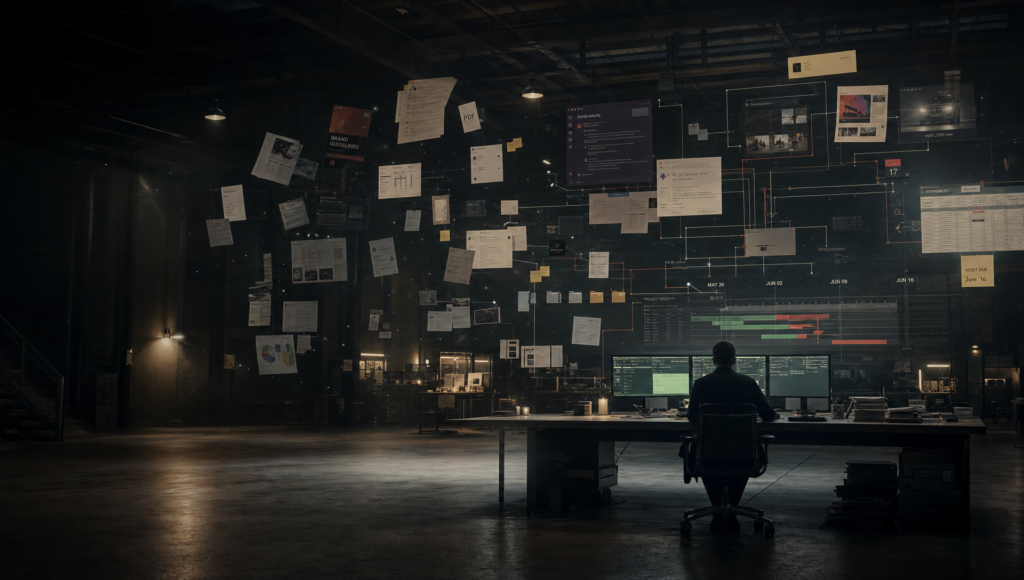
01. Request Management
The brief lands.
We do not need a perfect brief. We need the assets and the deadline.
Everything else, the scope, the structure, the sequencing, the gaps, is what the system is built to resolve. By the time a human being at WAV opens the brief, the intake process has already begun and the delivery plan is already forming.
The work starts the moment it arrives, in whatever form it arrives.
That is the point of having a system.
02. Transparency Day One
One place.
Everything that matters.
The first thing that happens is not design, or development, or estimation. The first thing that happens is structure.
This is not where tasks are managed. Anyone can manage tasks. This is where the tactic becomes knowable, a single view into what the work actually is, what it costs, when it delivers, and what happened to it along the way. Every agent in the system reads from this surface. Every human decision gets written back to it. It is the record that makes coordination possible without conversation — and it’s the difference between a project that is tracked and a project that is understood.

03. Delivery Planning
Scope becomes a
repeatable execution.
A scope statement comes in, a description of what needs to be built and the system does not guess – It patterns. It compares the incoming tactic against every tactic that has moved through the system before it: similar format, similar complexity, similar client profile, similar delivery requirements.
If we estimated a project at four weeks and it closed in three, the next tactic with a matching profile estimates at three. Not because someone updated a spreadsheet, but because the system recognized the pattern.
04. Brand Taste Profiles
The work is shaped by
what we already know.
Running alongside production three agents are listening. The Brain captures the project metadata that never makes it into a brief – the preferences, constraints, corrections, and directional decisions that accumulate in conversation and normally disappear. Strategist tracks the decision points that shape how the work should behave: regulatory considerations, brand sensitivities, audience context, platform constraints. Closer monitors the signals that indicate alignment or drift between what was asked and what is being built.
Together, they build a taste profile for the tactic. Not a mood board rather a structured record of how this brand thinks, what this project requires, and where the gaps are between the brief as written and the brief as actually meant.

05. Creative Analysis
Every asset is read before
anyone builds from it.
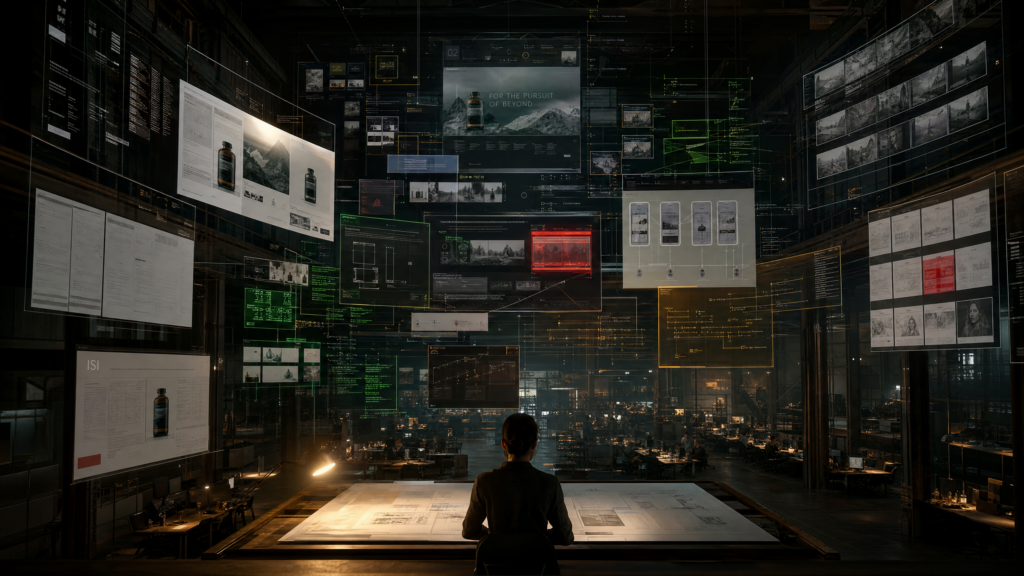
Wireframes arrive. Storyboards arrive. Final creative arrives. At each stage, Lovelace, our creative technologist agent, profiles what comes in. Not aesthetically. Structurally. What is here, what is missing, what is ambiguous, and what the gap between the design reference and a buildable specification actually looks like.
This is heavy gap detection. Lovelace is not looking for inspiration. It is looking for everything a developer would need to know that the creative does not explicitly state – animation behavior, responsive rules, state logic, ISI requirements, asset dependencies, accessibility implications – informing the taste profile
By the time a human developer touches the work, the ambiguity has already been named. That is not a small thing.
06. Learned Acceleration
The first version of the
thing already exists.
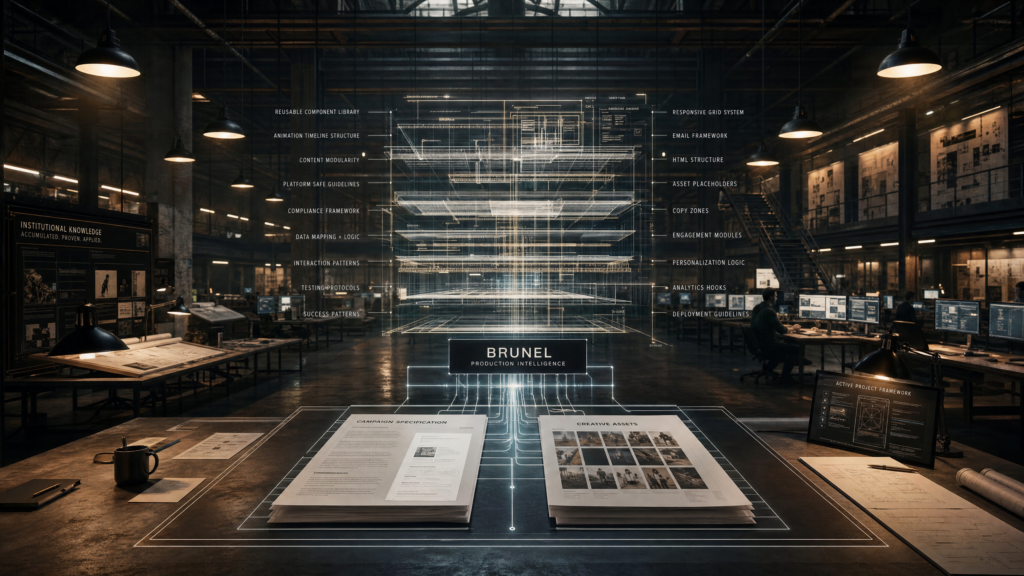
Brunel takes the specification, informed by the brief, the taste profile, the Lovelace analysis and generates a base scaffold. For display, for email, for web. Not a blank file. Not a template. A structured starting point built to the known parameters of the tactic: client conventions, platform requirements, animation patterns, compliance constraints, asset placeholders, and the accumulated preferences that the system has learned about this kind of work.
Human developers do not start from zero. They start from a scaffold that has already absorbed the intelligence of the brief and the history of the system. Their job is final delivery which is the creative judgment, the craft, the last mile and not reconstruction of decisions that were already made.
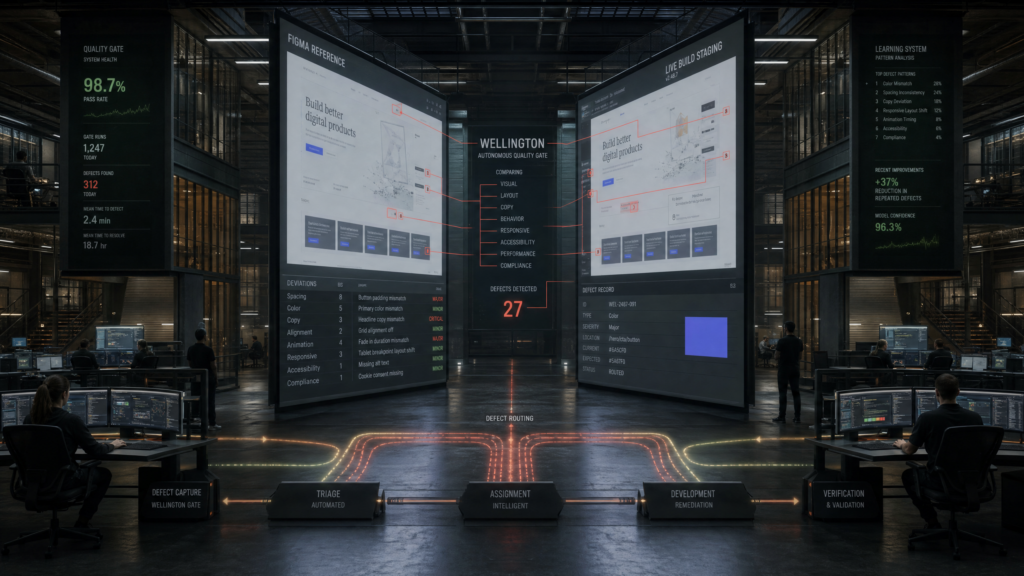
07. The Quality Gate
Design reference. Staging URL.
Defect or Delivery?
When the work is built, it is compared mechanically, precisely against the design reference and the live staging environment. Wellington runs the comparison. Deviations are found. Not approximations. Not impressions. Actual, specific, documented deviations: layout, spacing, color, animation, copy, behavior, compliance requirements.
Every defect found here also feeds the system. If a certain type of creative consistently produces a certain type of gap, the estimate for that creative type updates. If a scaffold consistently requires the same corrections, the scaffold updates. The gate is not just quality control. It is a data collection event.
08. The Delivery Pattern
Clean. On time. On spec.
This is the moment the work stops being a production problem and becomes a market reality. A concept that started as a brief — rough, incomplete, full of implied decisions — has moved through structure, intelligence, and craft and arrived as something a consumer will actually see, interact with, and respond to.
The distance between that first asset drop and this moment is where the work happens. Most of that distance is invisible. It should be.
The thing exists now. It is in the world. That is what the system was built for.
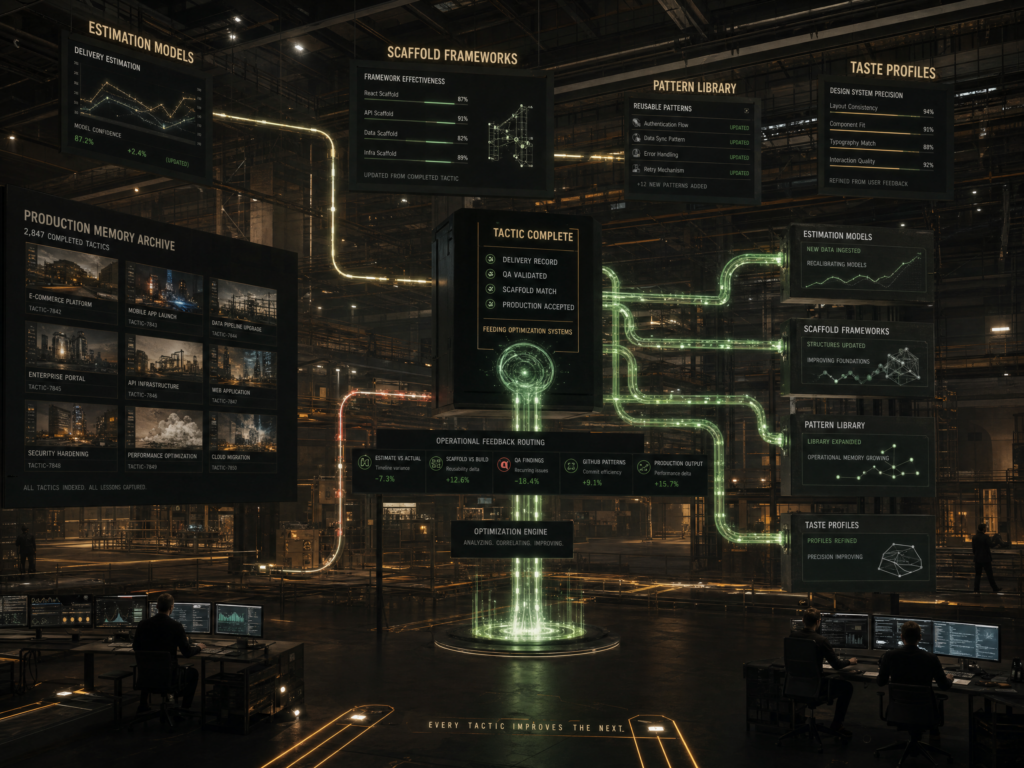
09. The Learning Loop
Every project makes
the next one better.
When the tactic closes, the record does not close with it. Actuals are compared against estimates. Delivery shape is compared against the original scaffold. GitHub commits are reviewed – not for oversight, but for signal.
The system updates. The taste profiles refine. The comps library grows. The estimating agents have one more completed tactic to pattern against.
Nothing about this is abstract.
More projects in, more efficient the delivery system becomes. Not because we work harder. Because the system learns faster than manual production ever could.
10. Silence is Golden
The measure of success.
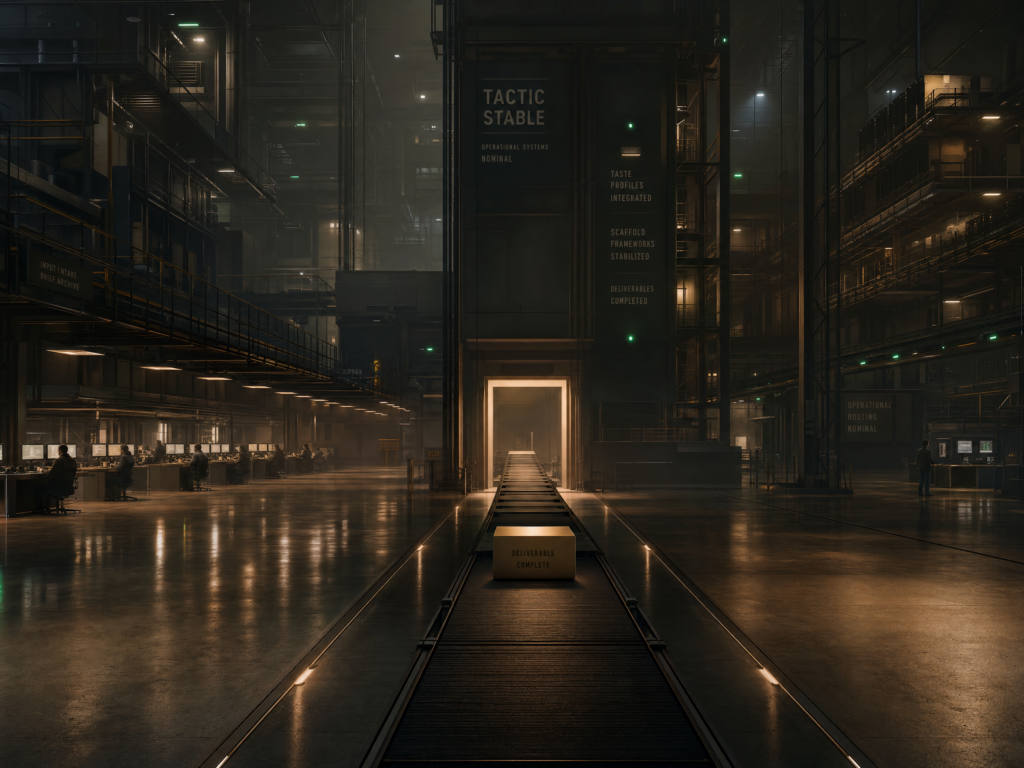
When the system is working, no one talks about production. There is no fire. There is no late night. There is no version thirteen of a file that was supposed to have three. The brief moved through the system, became a tactic, became a scaffold, became an output, became a deliverable and the delivery became unremarkable.
Unremarkable is the objective.
And the next one will be easier than this one.
That is the system working exactly as designed.
We make things, invisibly and reliably. That is exactly the point.
FAQs
Work That Speaks For Itself





WAV partners have reduced average production cycle time by 30–40% within the first two quarters of operating on the Production Operating System. Estimate accuracy improves with every completed tactic. The more the system runs, the less the work costs to deliver at the same quality standard.