
High-Volume Social Video Adaptation
Isn’t Painful or Expensive — It’s a Discipline
TL;DR: Social video adaptation is the work of taking one approved master edit and fanning it out into dozens of platform-, ratio-, and length-specific versions without losing the original’s intent. At volume, a sustained pipeline can run 20 to 60 finished units a day, it stops being a creative exercise and becomes a systems problem. The shops that handle it well treat each version as a tracked unit moving through a repeatable line, not a fresh edit.
What Is Social Video Adaptation?

Social video adaptation is the production process of reformatting a single approved video into multiple versions sized, timed, and laid out for specific platforms, vertical for Reels and TikTok, square and 4:5 for feed, 16:9 for YouTube, six-second bumpers for pre-roll.
The source edit stays intact; the framing, captions, safe zones, and pacing change per destination.
It is distinct from the original production.
Nobody is shooting or conceiving the spot here.
The creative decision was already made.
Adaptation is the discipline of carrying that decision intact into formats it was never originally cut for and doing it at a count that makes manual one-offs untenable.
How Social Video Adaptation Works
The thing agencies underestimate is the multiplier.
A single :30 hero spot rarely ships as one deliverable.
It ships as a matrix.
Take a normal campaign master and run it through the real grid: four aspect ratios (9:16, 1:1, 4:5, 16:9), three durations (:06, :15, :30), captioned and clean versions, and platform-specific cuts for Meta, TikTok, YouTube Shorts, and LinkedIn.
That one master becomes 30 to 50 finished files before anyone asks for a localized or A/B variant. Multiply across a campaign’s worth of hero edits and you are inside the 5,000-to-15,000-unit-a-year range, which is where this work lives once a brand commits to always-on social.
The master is the only thing you protect
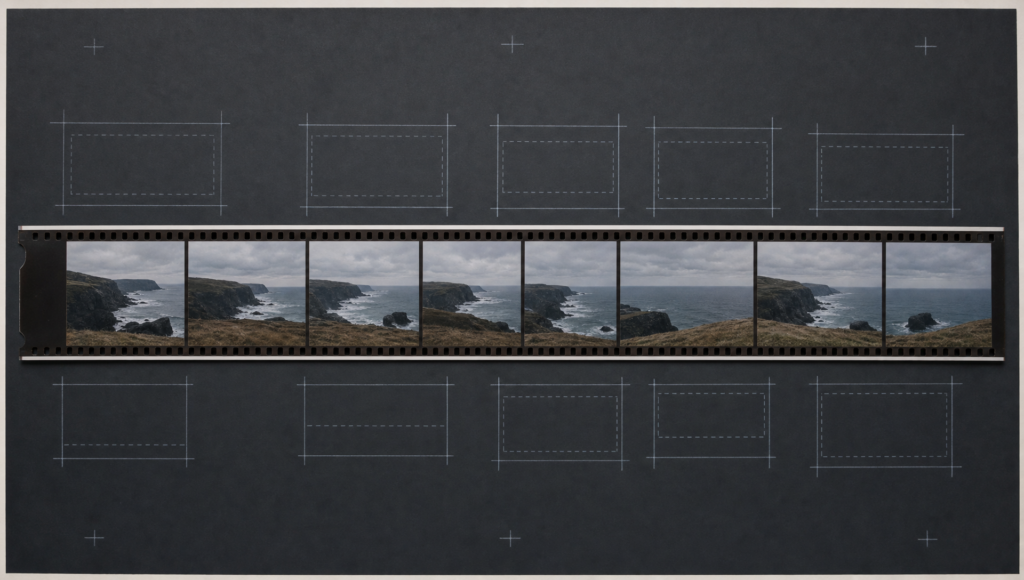
Every version traces back to one locked source. If the master changes, a legal note, a logo swap, a music clearance, every downstream unit is now stale. Good adaptation production keeps a hard line between the approved master and its derivatives so a change propagates predictably instead of leaving you guessing which of 40 files got the update. The failure mode is a folder full of hero_v3_FINAL_final2.mp4 with no system telling you which ones are current.
Reframing is a craft, not a crop
Center-cropping a 16:9 edit into 9:16 throws away two-thirds of the frame and usually the subject with it. Real adaptation re-keyframes the motion: animating position and scale shot by shot so the subject stays in the live area, the product stays visible, and the title cards reflow instead of clipping.
On a 4:5 feed cut the safe zones differ again because the platform’s own UI eats the bottom.
This is the part that does not automate cleanly, and it is the part clients notice.
Sound-off is the default, not the exception
The majority of feed video plays are muted. That means burned-in captions, kinetic text that carries the message without audio, and a first frame that works as a still. An adaptation that only sounds right with audio on is a broken deliverable.
Caption burn-in, timing, and legibility against the footage are production steps with their own QA pass not an afterthought dropped in at export.
Specs move, and they move without warning
Aspect ratios, max durations, caption safe areas, and file specs shift on the platforms’ timelines, not yours. A pipeline built around a hardcoded spec sheet breaks the week a platform changes its safe zone. The durable approach keeps specs as configuration the line reads from, so a platform change is a settings update rather than a re-cut of everything in flight.
Social Video Adaptation vs.
Original Social Production
| Social Video Adaptation | Original Social Production | |
| Starting point | One approved master edit | A brief and a blank timeline |
| Cost driver | Number of versions and platforms | Shoot, concept, and edit hours |
| Turnaround | Hours per version once master is locked | Days to weeks per spot |
| Creative ownership | Agency/brand owns the original idea | Agency/brand owns concept and execution |
| Where the risk lives | Version control, spec drift, reframing quality | Concept, casting, direction |
| Volume profile | High count, uniform effort per unit | Low count, high variance per unit |
The two get conflated in scoping conversations, and that is where budgets break.
Pricing adaptation like original production overcharges the client; pricing original production like adaptation guarantees a loss.
They are different lines.
What Great Social Video Production
Looks Like at Volume
When the count is uniform, most versions take roughly the same effort, the right model is a flat-count pipeline, not a per-project estimate. We track each version as a single unit moving through defined stages: master locked, reframed, captioned, QA’d, staged, delivered. The count is the unit of planning, because effort per unit is stable enough that a tracker built on flat counts predicts capacity better than one built on bespoke estimates.
That tracking discipline is the whole game. A campaign throwing off 20 to 60 finished units a day cannot live in a shared drive and a thread of “is this the latest?” Every unit needs a state, a parent master, and a place to be reviewed. We stage versions on a versioned platform where every amend cycle is a tracked revision, so the client reviews against a stable URL instead of a zip in their inbox, and we can see at a glance which units are out for approval and which are locked.
The other half is keeping reframing and caption quality consistent as the count climbs.
The work that separates a clean line from a sweatshop is the QA pass: confirming the subject holds in every ratio, captions are legible and correctly timed, safe zones respect each platform’s live area, and the first frame works muted. Volume is not an excuse for drift.
The system exists precisely so the hundredth unit looks like the first.
How to Evaluate a
Social Video Production Partner
How do you track an individual campaign’s versions?
- Good answer: a unit-level tracker where every version has a state and a parent master.
- Red Flag: a folder of files distinguished only by names ending in “final.”
What’s your turnaround per version once the master is locked?
- Good answer: a number, stated in hours, that holds across the matrix.
- Red Flag: “it depends” with no baseline.
How do you handle a platform changing its specs mid-campaign?
- Good answer: specs live as configuration; a change is a settings update.
- Red Flag: every spec is baked into templates that have to be rebuilt.
Who owns caption burn-in and sound-off design?
- Good answer: it’s a named production step with its own QA.
- Red Flag: captions are “added at the end.”
How do you stage review and collect feedback?
- Good answer: versioned staging with tracked revisions against a stable link.
- Red Flag: emailing zips and reconciling notes by hand.
Can you scale from 5 units to 50 in a week without quality dropping?
- Good answer: yes, because the line is built for flat-count volume and QA is systematized.
- Red Flag: yes, with no explanation of how quality holds.
How do you keep reframing quality consistent across hundreds of versions?
- Good answer: re-keyframed motion per ratio plus a QA pass that checks subject hold and safe zones.
- Red Flag: “we crop to center.”
Social video adaptation gets miscategorized as a creative task, and that mislabel is why it goes over budget and ships late often.
The creative decision was made upstream; what remains is volume, version control, and the craft of holding intent across formats. The studios that do this well build a line for it, flat-count tracking, configurable specs, versioned review, and a QA pass that refuses to let quality slip as the count rises.
We treat adaptation as a manufacturing problem with a craft core, because that is what it is, and that is the only way it holds up at scale.
Frequently Asked Questions
Join innovative agencies and brands who’ve discovered that the best digital studios aren’t built – they’re partnered with.
“WAV doesn’t feel like a vendor – they feel like our team members who happen to work remotely. The quality is consistently excellent and we never worry about capacity planning anymore.”
~2025, The Horses Mouth